

India's Digital Personal Data Protection Rules were notified in November 2025, and most of what they require applies from 13 May 2027. For a lot of businesses that sounds like a policy update and a new consent banner. For a business running an AI chatbot, a support agent or a knowledge assistant, it is an engineering job, and a bigger one than it looks.
The reason is simple. An AI system copies personal data into places a traditional app never did: prompts, transcripts, search indexes, evaluation sets and the logs of a model provider. Each of those copies is covered by the Act, and each one has to be found, justified, protected and, eventually, deleted.
This guide explains where personal data hides in an AI system, what the DPDP Act and Rules ask of you, and what to fix in the six months that remain.
What Applies, and When
The Act was passed in 2023. The Rules that make it work were notified in November 2025 and come into force in stages:
- November 2025: the Data Protection Board and the definitions took effect.
- November 2026: the rules for registering consent managers came into force.
- May 2027: the core obligations apply, including notice, consent, security safeguards, breach reporting, retention and erasure, children's data and the rights of individuals.
The government has also been discussing a shorter timeline with industry, so May 2027 is the latest date to plan for, not a guaranteed one. Penalties are set per breach of duty: up to ₹250 crore for failing to take reasonable security safeguards, and up to ₹200 crore for failing to report a breach or for breaking the rules on children's data.
Where Personal Data Hides in an AI System
Before any of the obligations can be met, you need to know where the data is. In most AI systems we review, it sits in at least these places:
- The conversation itself: customers type names, phone numbers, order details, health conditions and complaints straight into a chat box.
- Prompts sent to the model: the system adds customer records, past orders or CRM notes to each prompt so the model can answer well.
- The model provider: every prompt leaves your servers. Where it is processed, whether it is stored and for how long depends on your contract with the provider.
- Retrieval indexes: documents loaded into a vector database for search often include contracts, emails and tickets with personal details inside them.
- Logs and transcripts: full conversations are usually kept for debugging, quality review and analytics, frequently with no end date.
- Evaluation and training sets: real conversations copied into test suites or fine-tuning data outlive the purpose they were collected for.
- Tool calls: an agent that looks up orders, books appointments or updates a CRM moves personal data between systems on its own.
What the DPDP Rules Mean for AI Systems

1. Notice and consent before the first message
The person must be told, in clear and plain language, what personal data you collect and the specific purpose you use it for, before or when you ask for consent. The notice can be in English or any of the 22 languages in the Eighth Schedule, and it has to stand on its own rather than being buried in general terms. Consent must be a clear affirmative action, and withdrawing it must be as easy as giving it.
For a chatbot this means a short notice before the conversation starts, a real action to agree, and a visible way to withdraw later. A line in the footer of the website is not enough.
2. Use the data only for the purpose you named
If a customer shares their details to resolve a delivery complaint, that is the purpose. Reusing the same transcript to train a model, build a marketing profile or test a new agent is a different purpose and needs its own basis. Decide now which uses you need, name them in the notice, and keep the data for other uses out of your evaluation and training sets, or mask it first.
3. Mask before the model
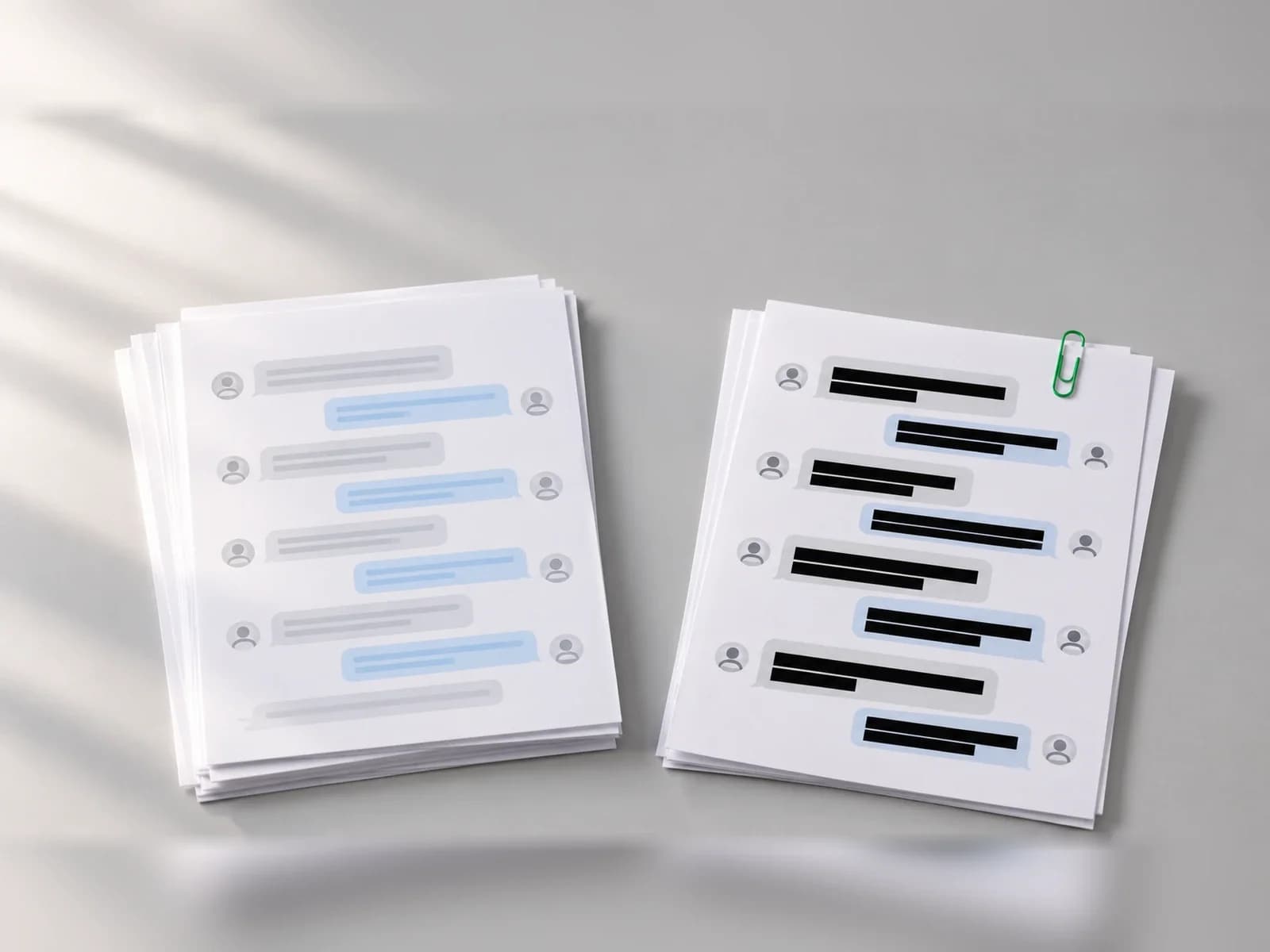
The simplest way to reduce risk is to send less. Detect and replace phone numbers, email addresses, Aadhaar and PAN numbers, account numbers and similar identifiers before the prompt leaves your servers, and restore them only where the answer needs them. The model rarely needs a real phone number to draft a reply. Masking also limits what a model provider holds and what a leaked log can expose.
4. Make erasure reach every copy

When a person withdraws consent or the purpose is complete, the data must be erased unless the law requires you to keep it. In an AI system, erasure has to reach the transcript, the CRM notes, the search index entries built from that person's documents, cached prompts and any copies in test sets. If your vector database cannot delete the entries for one person, that is a design problem to fix now, not in May 2027.
The Rules also set a minimum of one year for keeping certain logs and related data, so design the two together: keep the security record of what happened, and separate it from the personal content of the conversation, which follows your erasure rules.
5. Reasonable security safeguards
The Rules expect measures such as encryption or masking of personal data, access controls, logs that let you detect unauthorised access, and backups that let you recover. For AI systems, add the risks that are specific to them: prompt injection that tricks an agent into revealing another customer's data, over-broad tool permissions, and staff who can read every transcript. Give agents read-only access by default and the narrowest permissions that do the job.
6. Breach reporting that includes the agent
If an agent shows one customer's order history to another, or a transcript store is exposed, that is a personal data breach. Affected people must be told without delay, and the Data Protection Board must receive a detailed report within 72 hours of you becoming aware. That is only possible if your logs show what the agent read and said, and if someone is named to act on it. Add AI incidents to your breach response plan before you need it.
7. Treat the model provider as a processor
The company that runs the model processes data on your behalf, and you remain responsible for it. Have a contract that covers what they store, for how long, whether they train on your data, where it is processed and how they help you meet erasure and breach duties. Transfers abroad are allowed under the Act except to countries the government restricts, but sector rules, such as those of the RBI for payment data, may still require data to stay in India.
8. Children's data
Processing the personal data of anyone under 18 needs verifiable consent from a parent or guardian, and tracking, behavioural monitoring and targeted advertising aimed at children are not allowed. An education, gaming or consumer chatbot that children may use needs an age and consent step designed in, not added later.
9. Rights, grievances and the people who answer them
People can ask what data you hold about them, correct it, have it erased and raise a grievance. Publish how to do this and how quickly you respond, and make sure the request reaches every system, including the AI ones. A customer who asks your chatbot to delete their data should get a clear route to that, not an improvised answer.
Significant Data Fiduciaries
Businesses the government notifies as Significant Data Fiduciaries, usually because of the volume or sensitivity of the data they process, have more to do: an annual data protection impact assessment and audit, and checks that the algorithmic software they use does not put people's rights at risk. If you could be one, an AI system with no documentation of its data flows and testing will be hard to defend.
A DPDP Checklist for AI Chatbots and Agents
Work through these before May 2027. If you can answer yes to each, you are in a good position:
- 1Data map: every place personal data goes in the AI system is listed, including prompts, the model provider, indexes, logs and test sets.
- 2Notice: users see a clear, itemised notice before the conversation, in a language they understand.
- 3Consent: users agree with a clear action, and can withdraw as easily as they agreed.
- 4Purpose: training, evaluation and analytics uses are either named in the notice or run on masked data.
- 5Masking: identifiers are removed or replaced before prompts leave your servers.
- 6Erasure: one person's data can be deleted from transcripts, indexes, caches and test sets, and the deletion is tested.
- 7Retention: each store has a defined retention period, with security logs separated from conversation content.
- 8Security: agents have the narrowest permissions they need, access to transcripts is limited, and prompt injection is tested.
- 9Breach response: AI incidents are in the plan, with a named owner and the logs to report within 72 hours.
- 10Processors: the model provider's contract covers storage, training, location, erasure and breach support.
- 11Children: if children may use the system, age checks and parental consent are in place.
- 12Rights: access, correction, erasure and grievance requests reach the AI systems, with published response times.
Final Thoughts
The DPDP Rules do not stop anyone from using AI. They ask that you know where personal data goes, use it only for what you said, protect it and delete it when you are done. Those are hard to add to an AI system at the last minute and fairly easy to design in from the start.
If you are running a chatbot or agent today, start with the data map. Most of the remaining work becomes obvious once you can see every copy.
At Astrylx, we build AI agents and assistants with masking, scoped permissions, erasure and audit logs designed in from the first sprint. If you want a second pair of eyes on an AI system before May 2027, we are happy to take a look.
Frequently Asked Questions
Does the DPDP Act apply to AI chatbots?
Yes. If a chatbot or agent collects or processes the digital personal data of people in India, the business running it is a data fiduciary under the Act, and the notice, consent, security, breach and erasure duties apply to everything the system stores and sends.
When do the DPDP Rules come into force?
The Rules were notified in November 2025 and apply in stages. Most obligations, including consent, security safeguards, breach reporting and erasure, apply from 13 May 2027. The government has discussed shortening this timeline, so plan for that date as the latest.
Can we send customer data to an AI model hosted outside India?
The Act allows transfers abroad except to countries the government restricts. You remain responsible for the data, so the provider's contract must cover storage, training and deletion, and sector rules, such as RBI rules for payment data, may still require data to stay in India.
Do we need consent to use chat transcripts to train or test our AI?
If training or testing is a different purpose from the one the customer agreed to, you need a separate basis, usually consent named in the notice. The safer option is to mask or remove personal data from transcripts before they enter test or training sets.
What counts as a personal data breach for an AI agent?
Any unauthorised processing, disclosure or loss of personal data, for example an agent revealing one customer's details to another after a prompt injection, or an exposed transcript store. Affected people must be told without delay and the Data Protection Board within 72 hours.
What are the penalties under the DPDP Act?
Penalties depend on the duty breached. Failing to take reasonable security safeguards can lead to a penalty of up to ₹250 crore, and failing to report a breach or meet the duties on children's data up to ₹200 crore.
(/api/v1/uploads/articles/85c88d5d84154b7edbaad1b963e85283.webp "")